Content Strategy on a Global Scale
Full-Site Content Strategy & Page Templates for a Global Events Network
I served as content strategist for a full website redesign of a global destination management and events company with a network spanning 500+ locations across nine regions. The engagement covered the complete content lifecycle: auditing the existing site structure, proposing a new information architecture, and delivering detailed page-level templates with SEO guidance, word counts, CTA strategy, and rich media direction for every page. The redesigned site launched and is live in production.
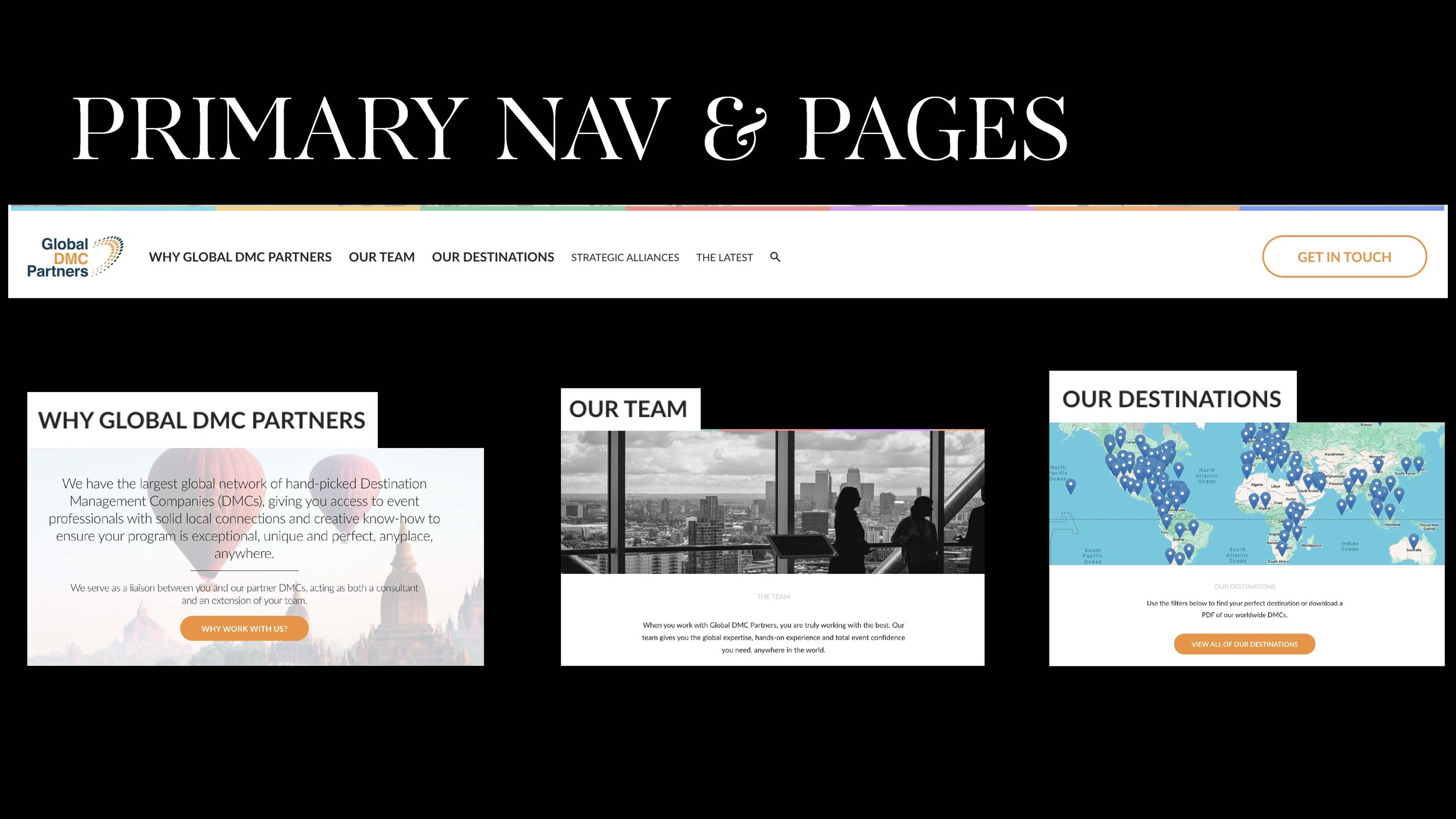
The existing site had been built incrementally over years with no unified content strategy. Navigation didn't reflect how users looked for information, key differentiators were buried, and there was no consistent framework for the dozens of destination-specific pages that formed the core of the site's value.
What made this engagement distinctive was the level of specificity required. Rather than delivering a strategy deck, I handed the development team build-ready templates with exact word counts, CTA destinations, keyword targets, and media specs for every section of every page. That detail is what made the site launchable without content becoming a bottleneck. The destination page framework continues to scale as the client adds new locations.


What I Did
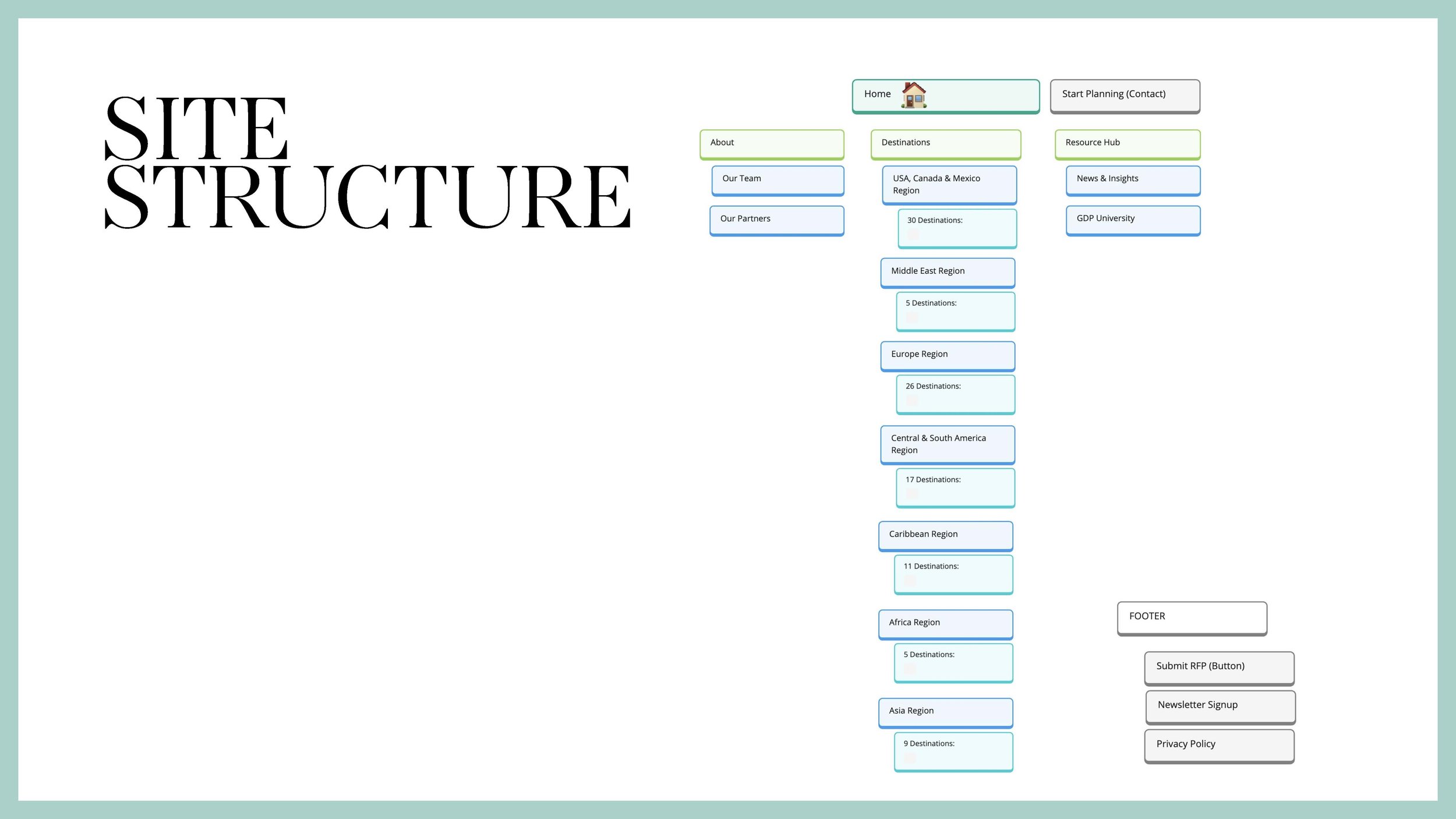
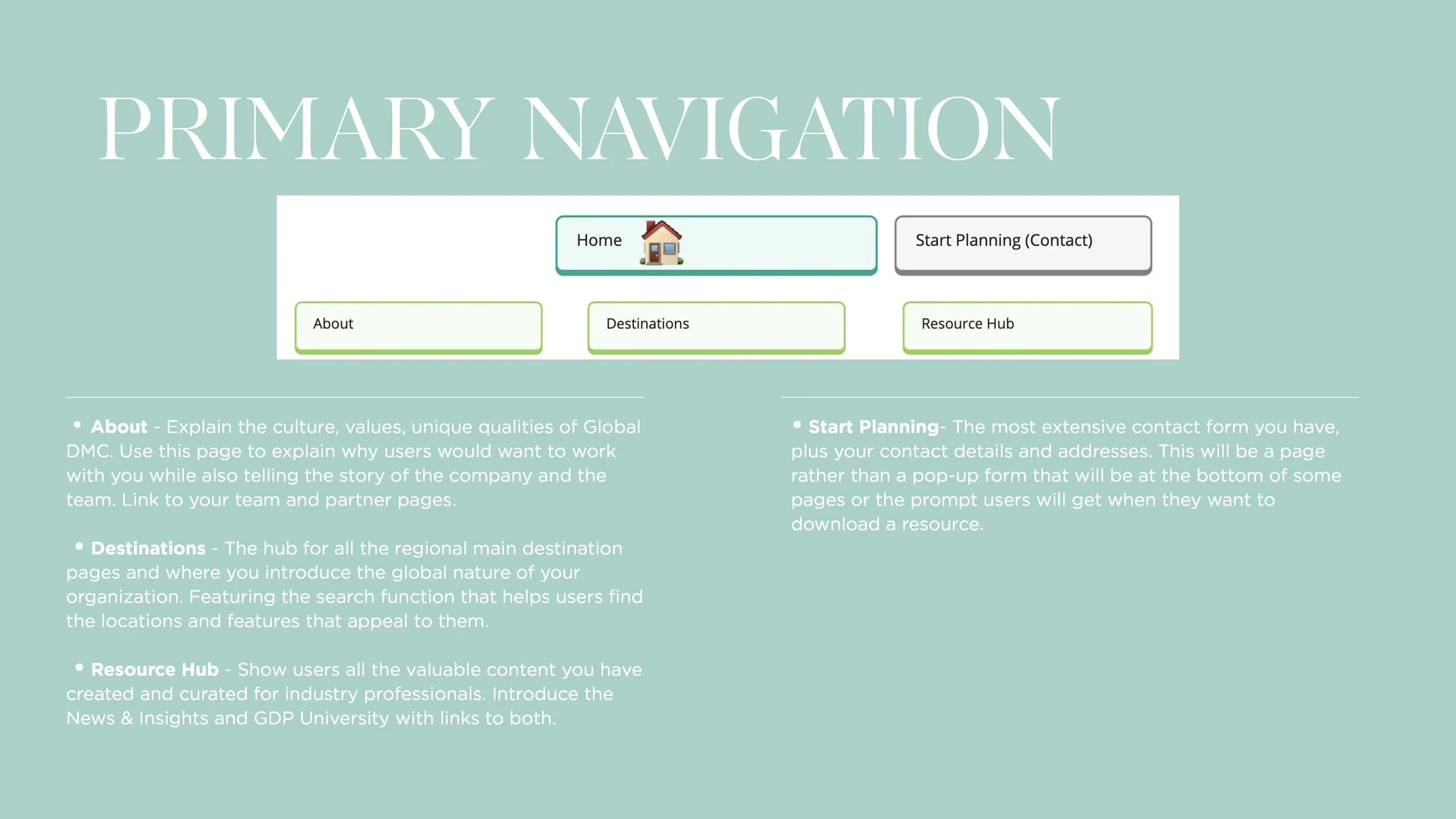
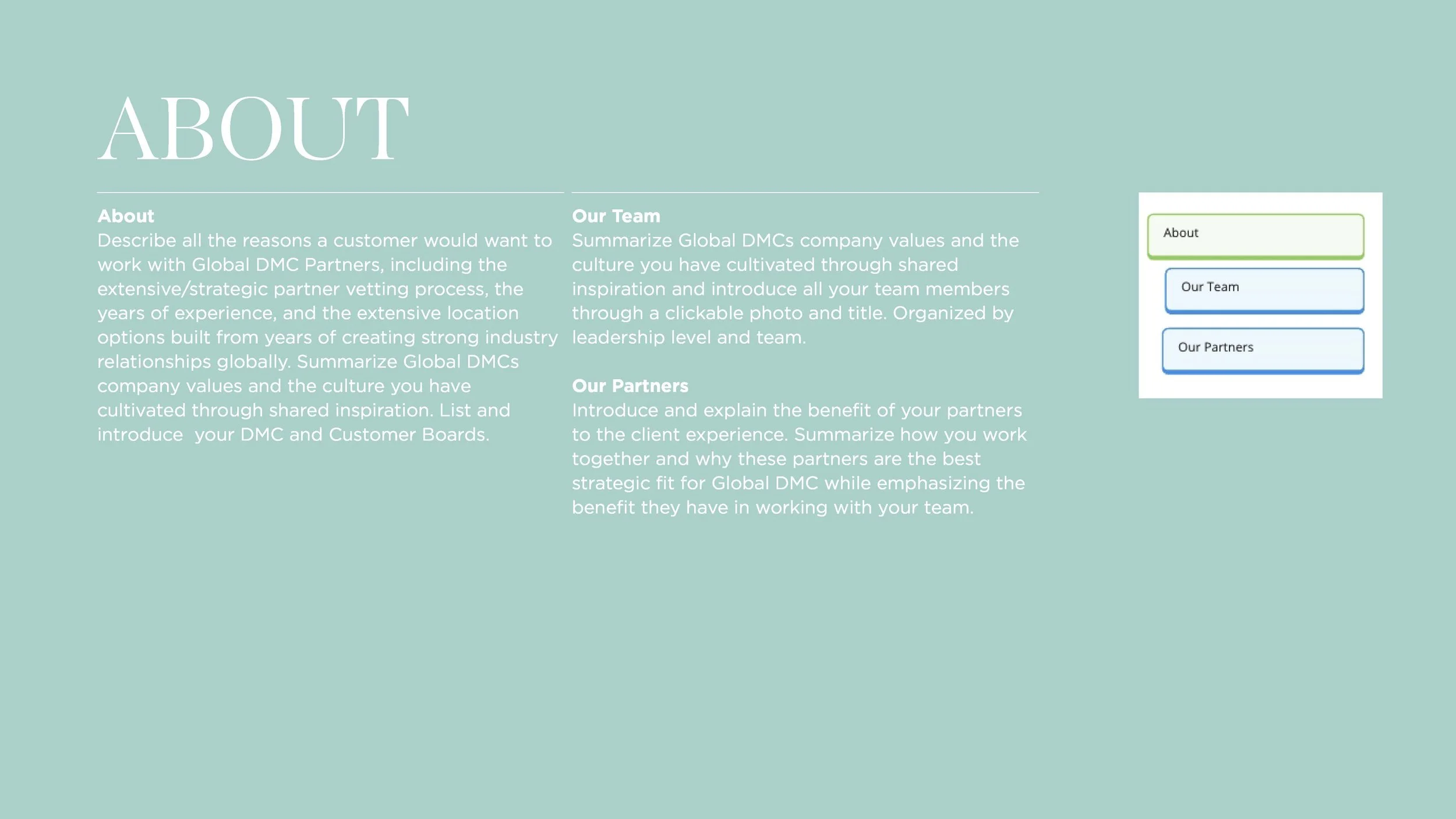
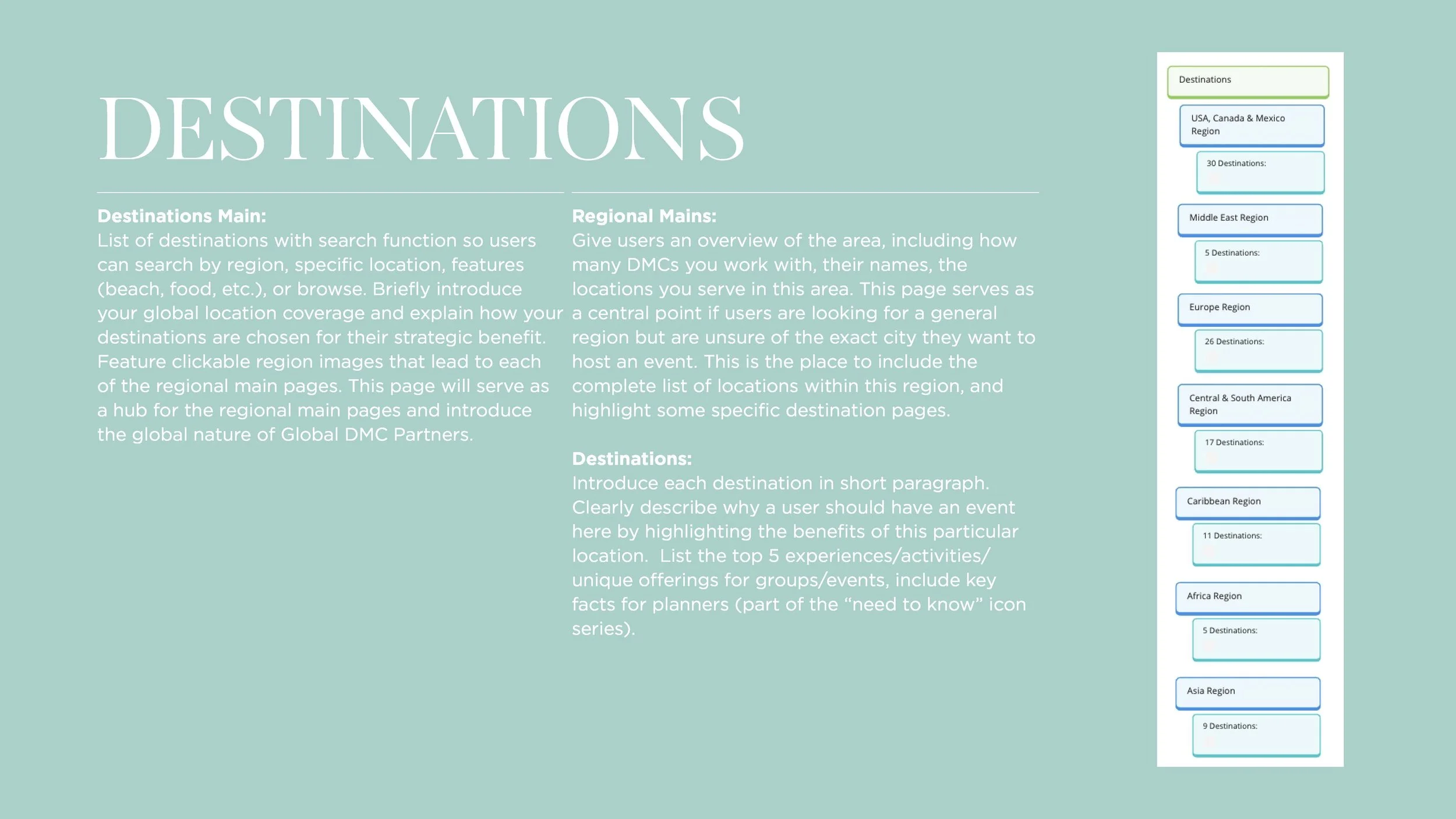
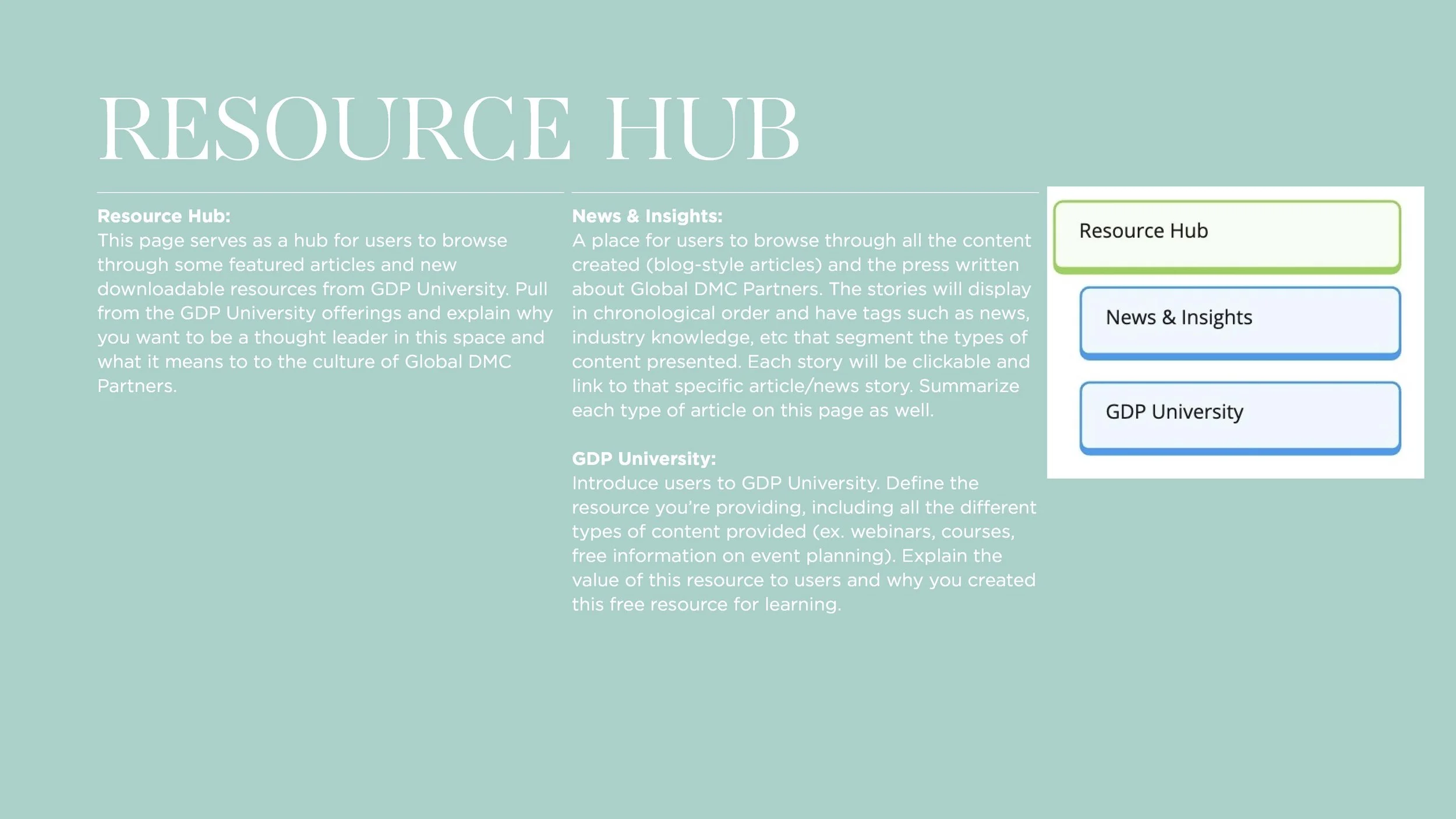
Site Audit & Navigation Redesign I mapped the existing site's full page hierarchy, identified structural problems, and proposed a streamlined primary navigation organized around four core sections: About, Destinations, Resource Hub, and a primary contact page, each with defined sub-pages and clear user pathways.
Scalable Destination Page Framework With hundreds of locations to cover, each page needed to feel specific without requiring entirely custom copy. I designed a repeatable template including a destination summary, filterable category tags, a Key Facts for Planners section with structured data fields, and a curated top experiences section. The framework let the client populate pages efficiently while maintaining quality and SEO value.
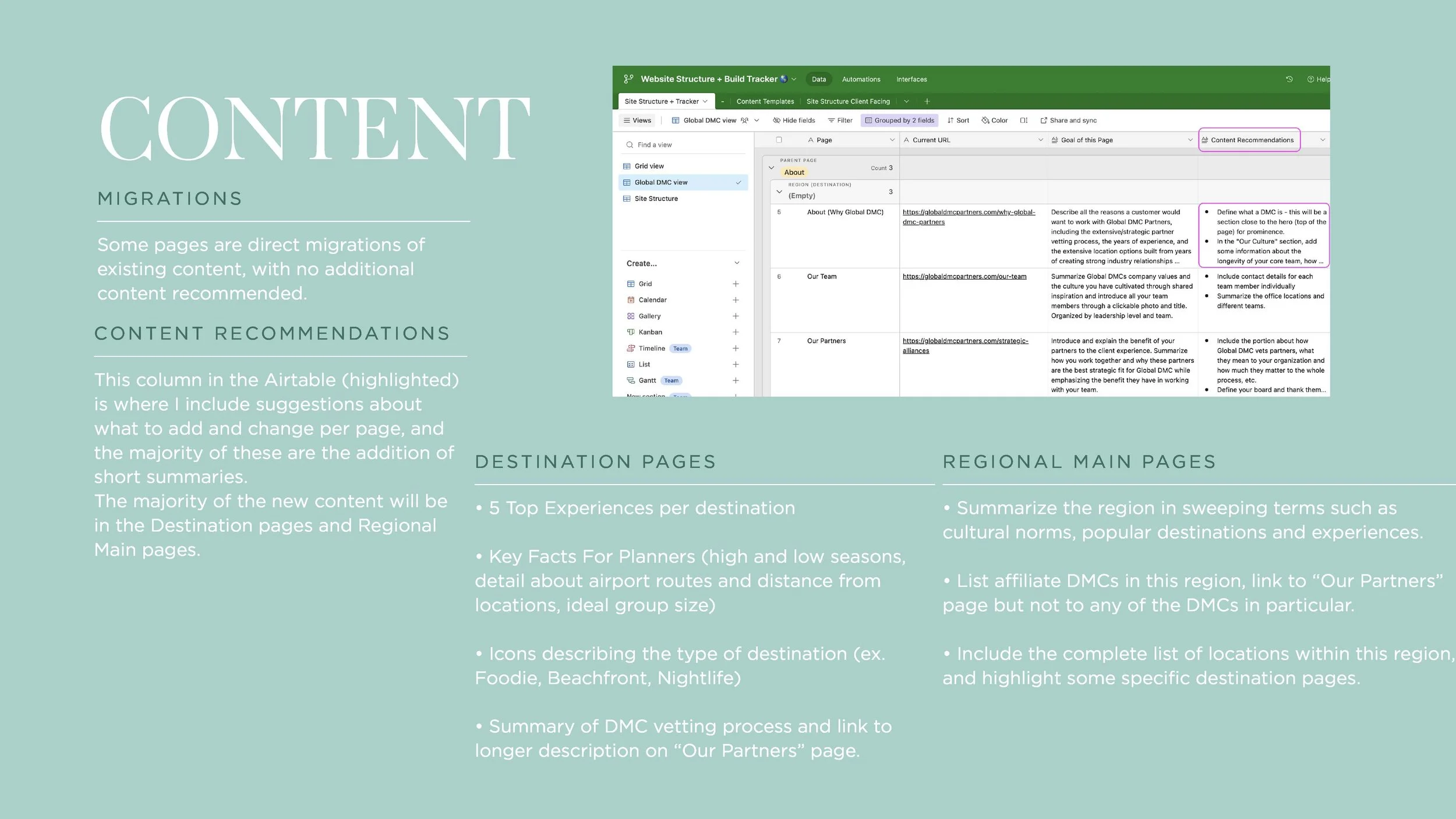
Page-Level Content Templates For every unique page type I delivered detailed content briefs specifying the page goal, meta description, target keywords, heading structure, word count ranges per section, CTA placement and destination links, and rich media recommendations. These were build-ready documents the development team could work from directly.
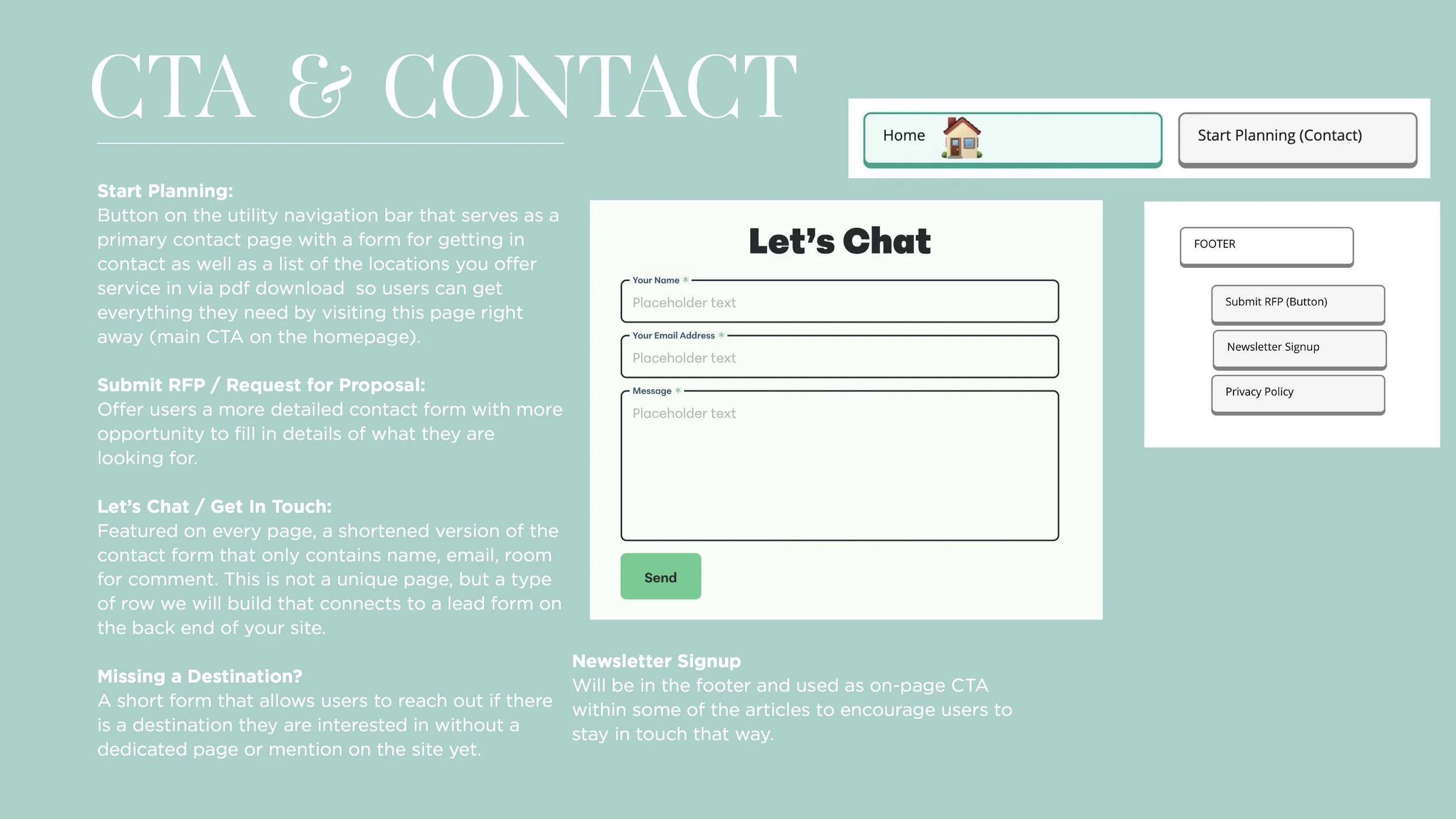
CTA & Conversion Architecture I designed a layered contact strategy with multiple entry points: a primary planning form, a detailed RFP submission form for qualified leads, a lightweight contact form embedded across pages, and a specialized form to capture demand signals for new locations. Each was mapped to specific user intent rather than relying on a single generic contact form.
Resource Hub & Education Platform Strategy The client had a free professional education platform that was siloed from the main site. I brought it into the information architecture under a Resource Hub alongside a news and insights blog, creating a content ecosystem that positioned the company as a thought leader. I wrote the full content brief for the education platform page including FAQ content, enrollment messaging, and value propositions.
SEO-Integrated Content Direction Every template included target keywords mapped to page intent, meta descriptions written to character-count specifications, and heading structures designed for both readability and search performance. For destination pages, keyword guidance was built around location names, the highest-intent search terms for this type of business.
Key Deliverables
A content strategy deck covering existing structure analysis, proposed architecture, and page-by-page content direction
Detailed content templates for 6+ page types, each with goals, meta descriptions, keywords, heading hierarchy, word counts, CTA mapping, and media specs
A scalable destination page framework designed for 500+ locations
A multi-tier CTA and contact form strategy mapped to user intent
Content tracking and recommendations managed in Airtable for the development team
The final site launched and is live in production