Everything starts with research.
Self-Initiated Content & Social Strategy Research for a Design Agency
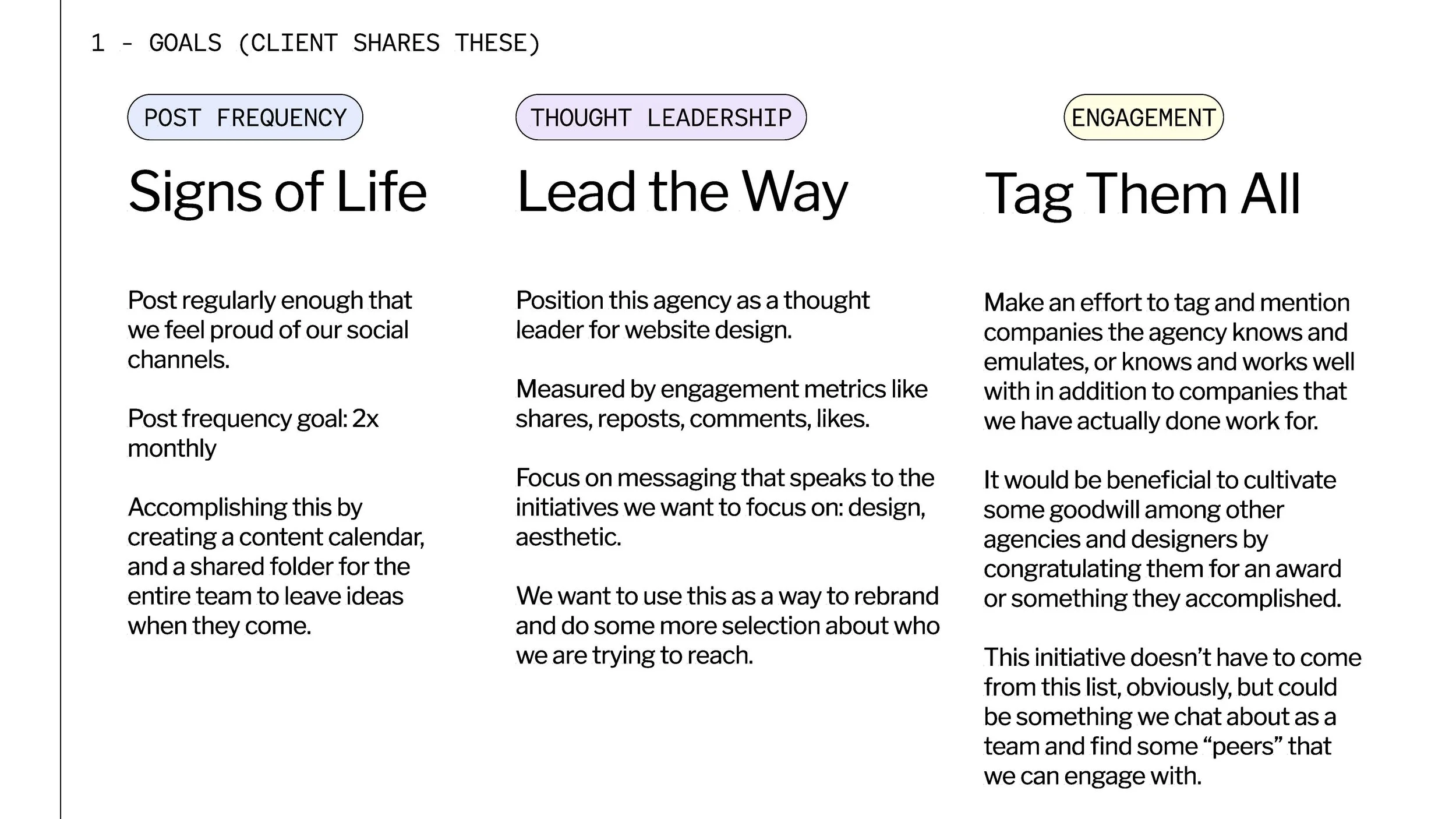
This project demonstrates how I approach a content strategy engagement from scratch. I designed it around a fictional-but-realistic brief: a small design studio with an inconsistent social presence and no formalized content strategy. The goals reflect what comes up again and again in this space — posting consistently, telling a stronger brand story, and building real engagement without a dedicated content team.
The research confirmed what often gets lost in the social media conversation: consistent quality across a narrow set of content pillars outperforms broad, scattered posting every time. Taking social media from an overwhelming obligation to something a small team can own with intention is the kind of clarity I bring to every strategy engagement.


What I Did
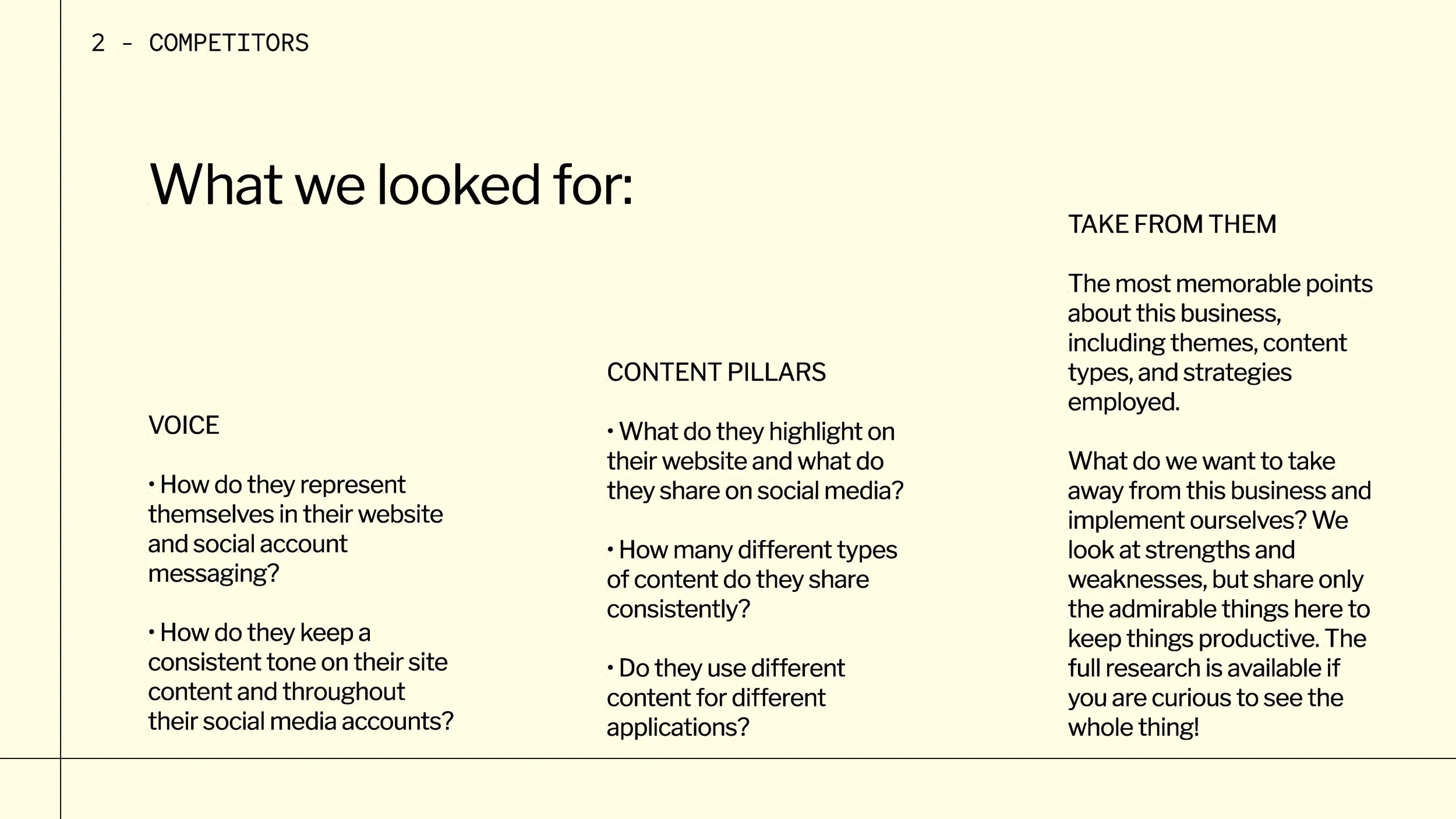
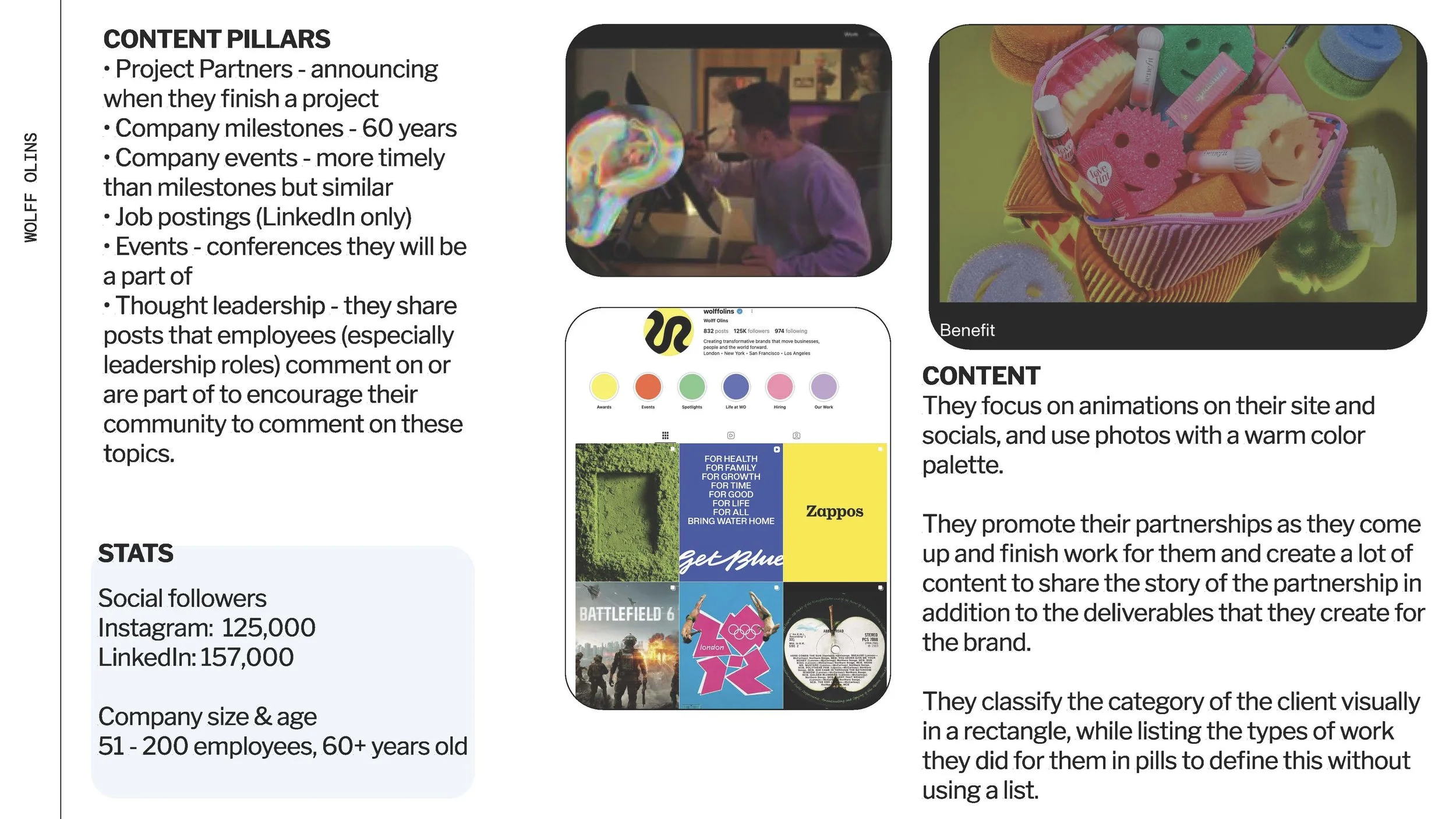
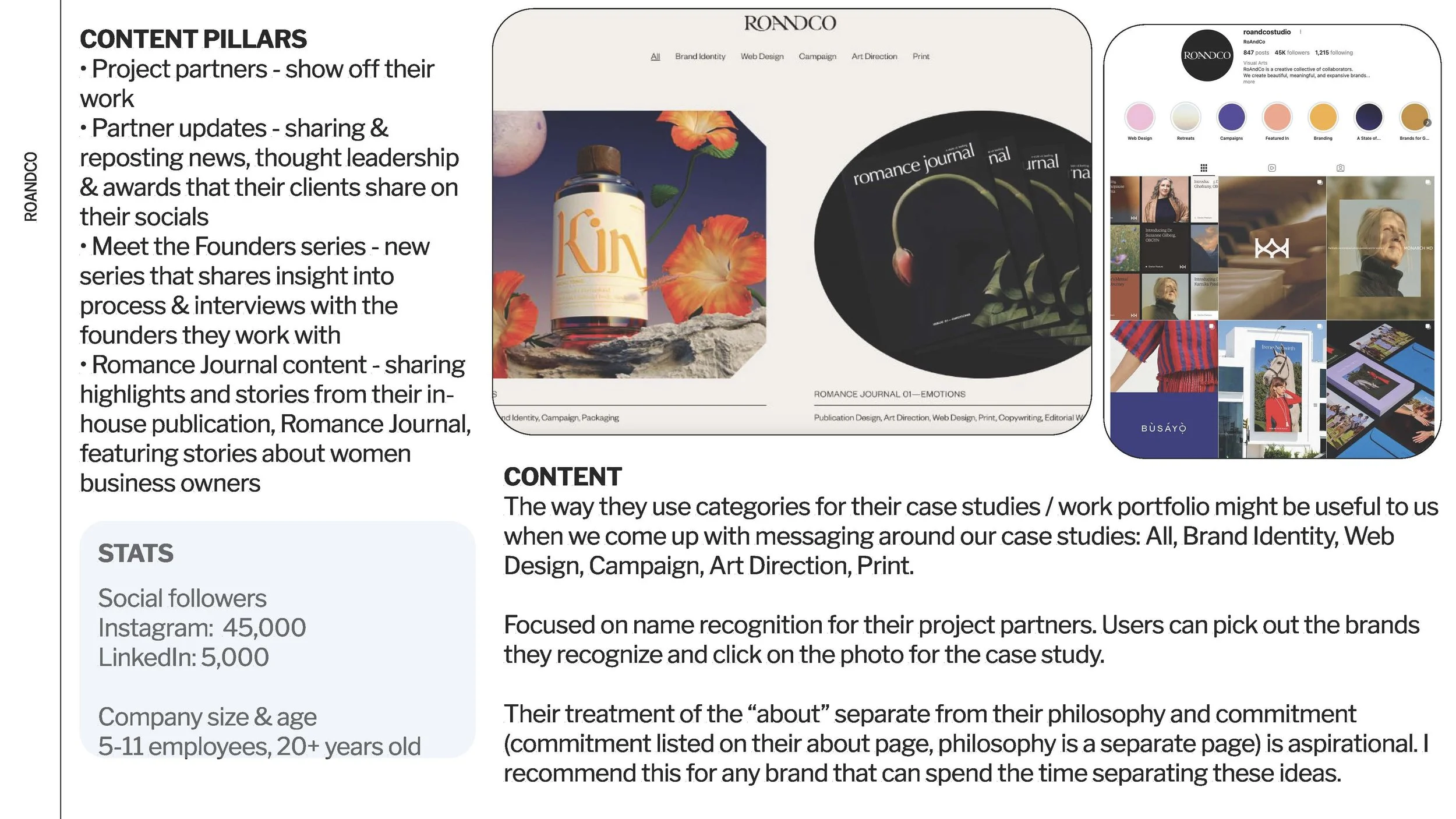
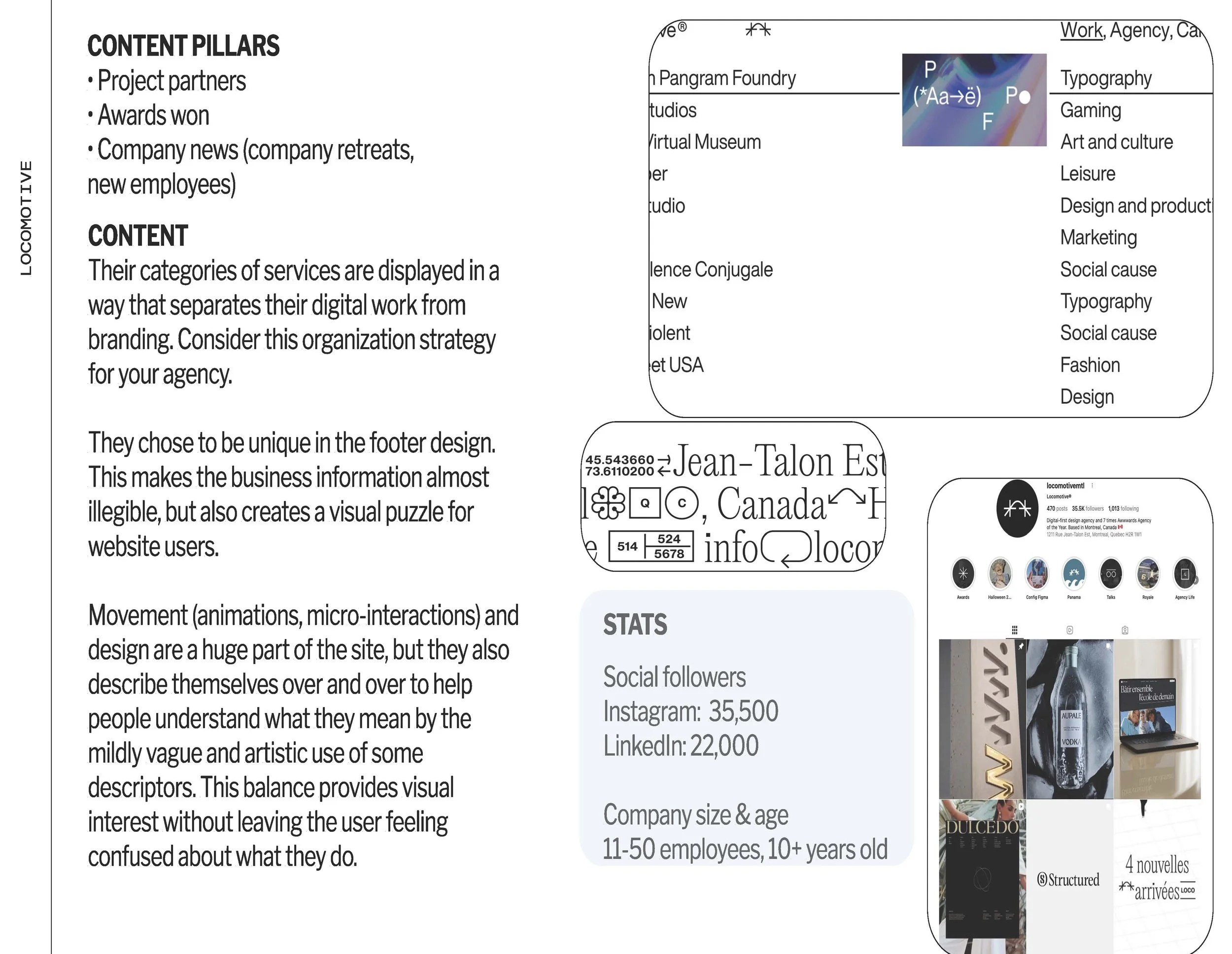
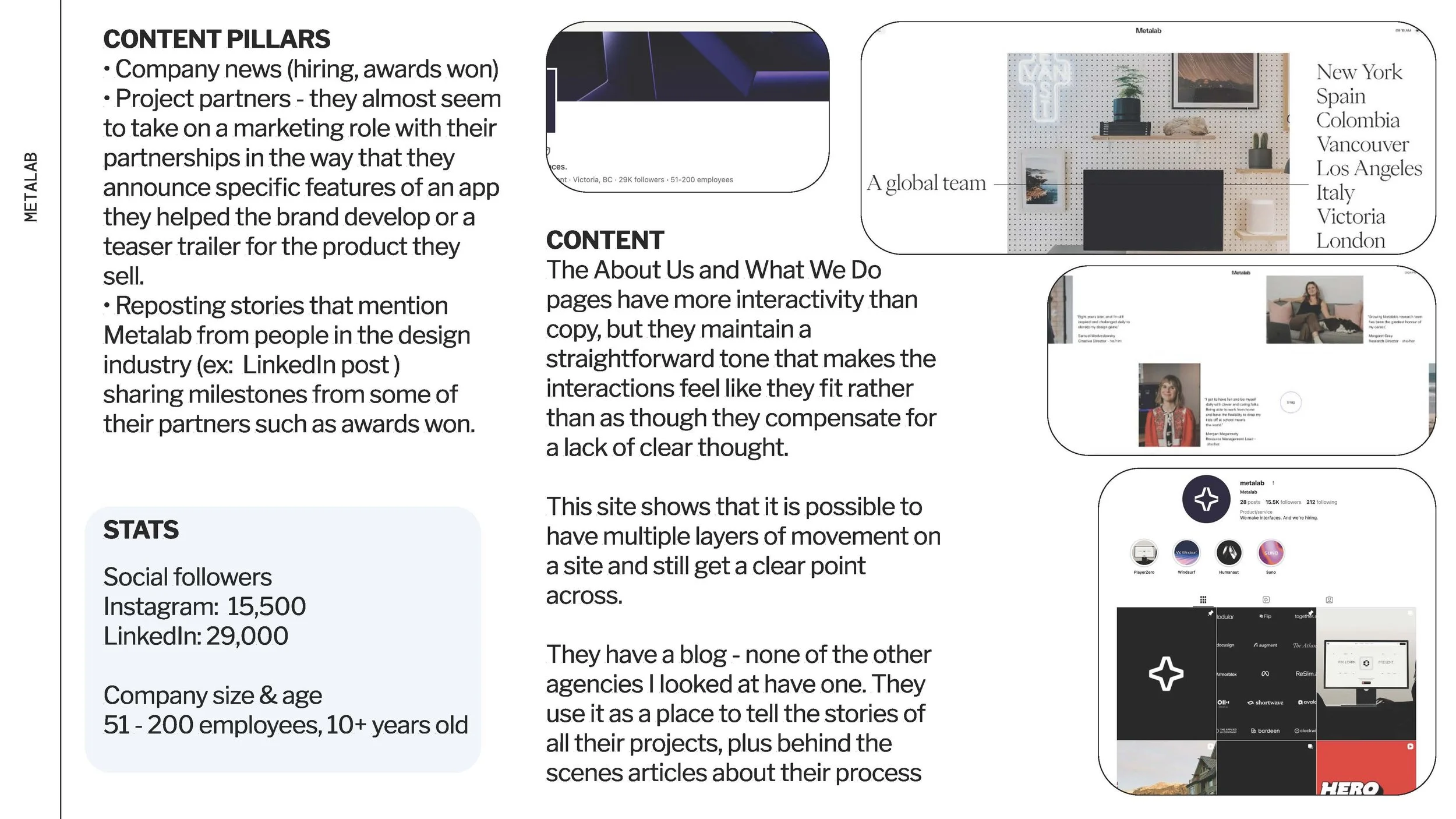
Competitive Audit Across Four Agencies I selected four real agencies ranging from 5-person studios to 200-person firms and analyzed their social accounts, website content, and brand voice, documenting content pillars, posting patterns, follower metrics, and the tactics that made each presence effective.
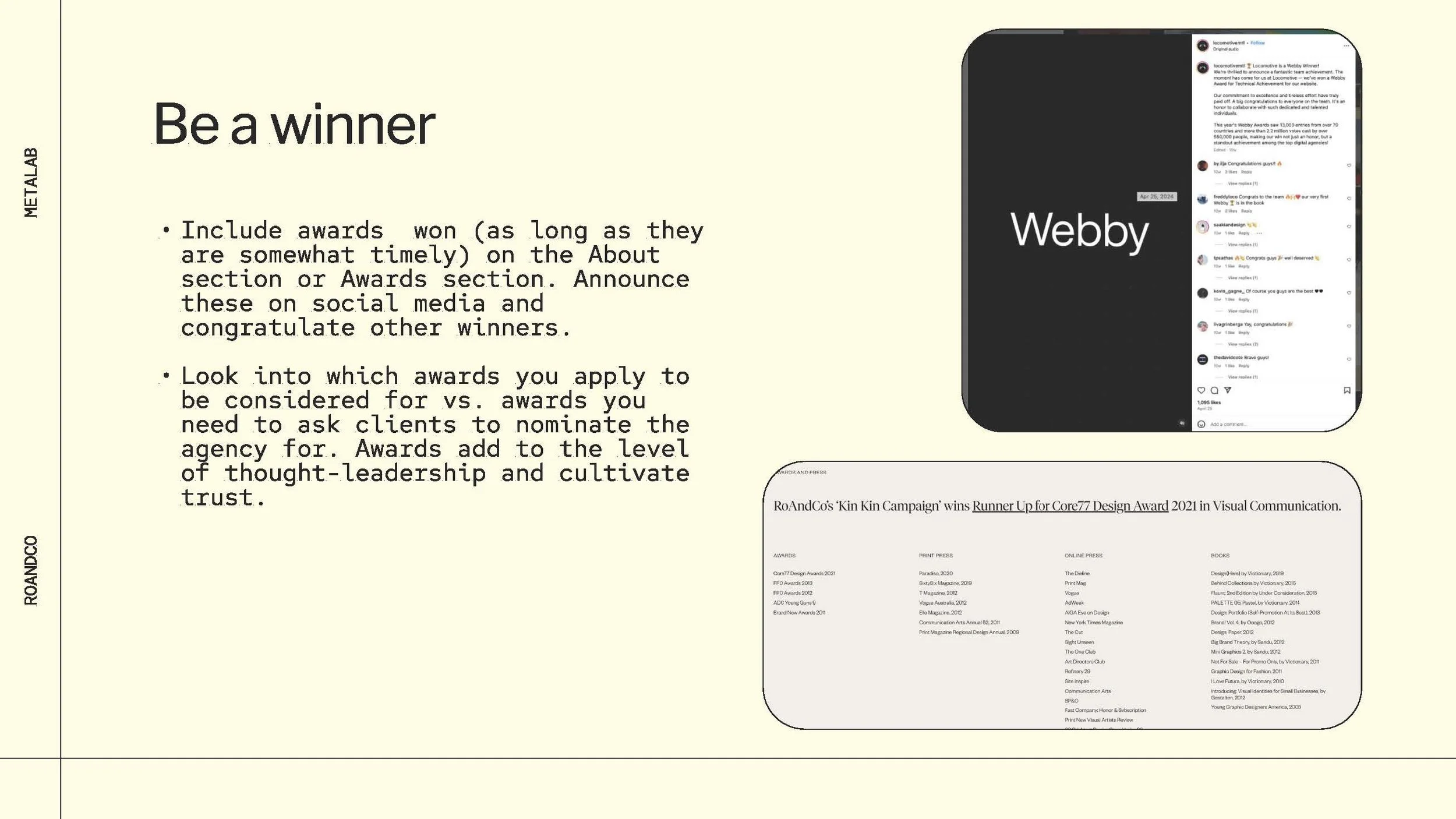
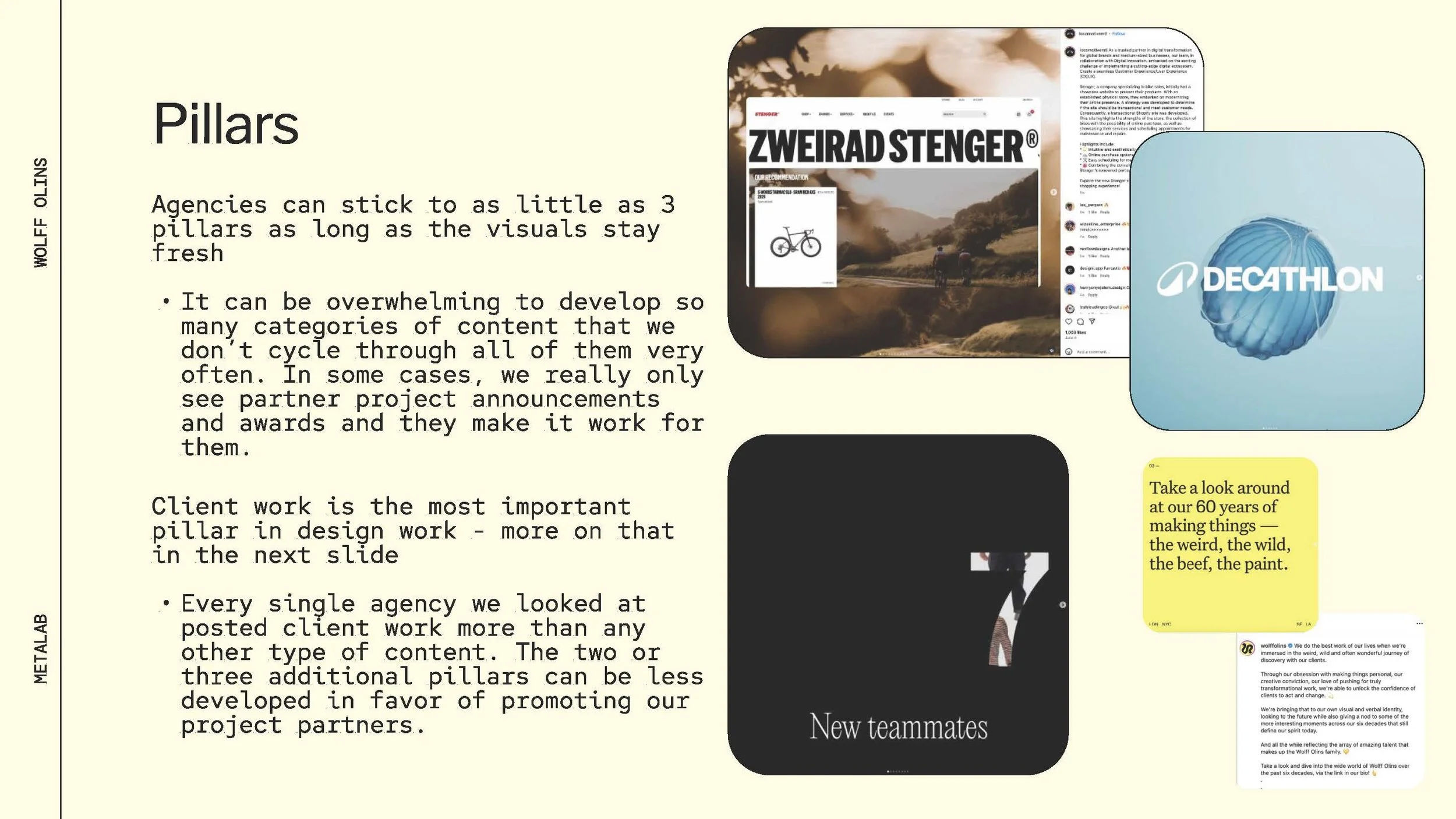
Content Pillar Analysis Across all four agencies, I mapped recurring content categories: project showcases, award announcements, culture moments, partner amplification, and thought leadership. Even the most successful relied on as few as three pillars. Client work was universally dominant; everything else could stay deliberately light.
Voice & Messaging Breakdown I evaluated how each agency balanced expressive brand language with clarity about their actual services. The most effective used visual interactivity to invite exploration while keeping copy plain and direct. My recommendation for the fictional client: lead with aesthetic, reinforce with straightforward language.
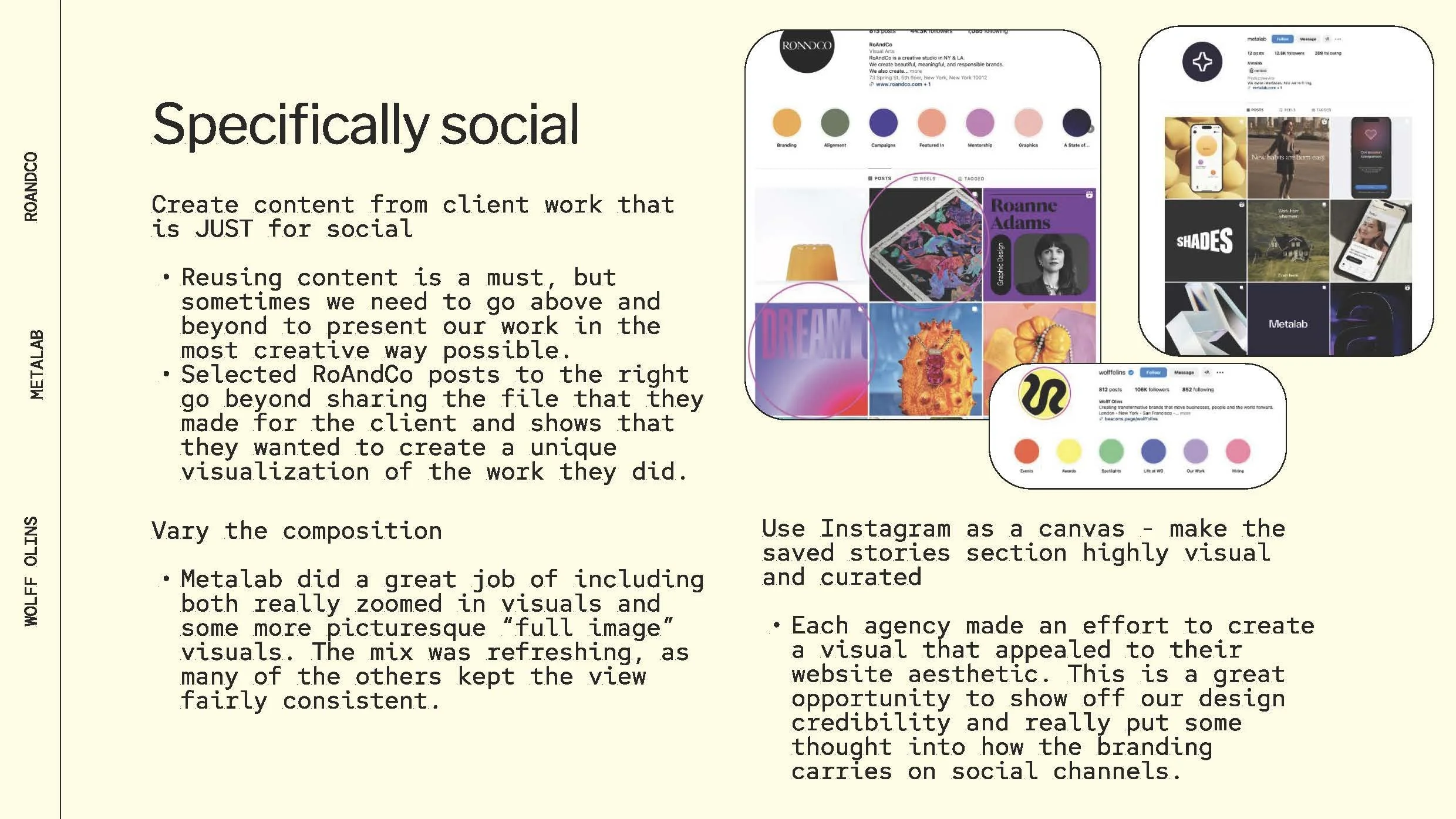
Platform-Specific Recommendations I developed tactical guidance for Instagram and LinkedIn, including how to treat saved stories as a curated portfolio, how to vary post composition, and why creating social-first content drives stronger engagement than repurposing client deliverables.
Engagement & Community-Building Strategy I proposed an outreach initiative built around tagging, congratulatory posts, and strategic reposting of peer agencies and industry contacts, a tactic that consistently performed well across the agencies I studied. Visibility in a design community comes as much from generosity as self-promotion.